
On the road with ISA preamps and Riccardo 'Ricky' Damian
Heritage sound and the portable rig Ricky Damian has trusted for a decade.
“Art is a free-flowing emotion. Our job is to capture it. We’re taking a picture in time.”
— Ricky Damian
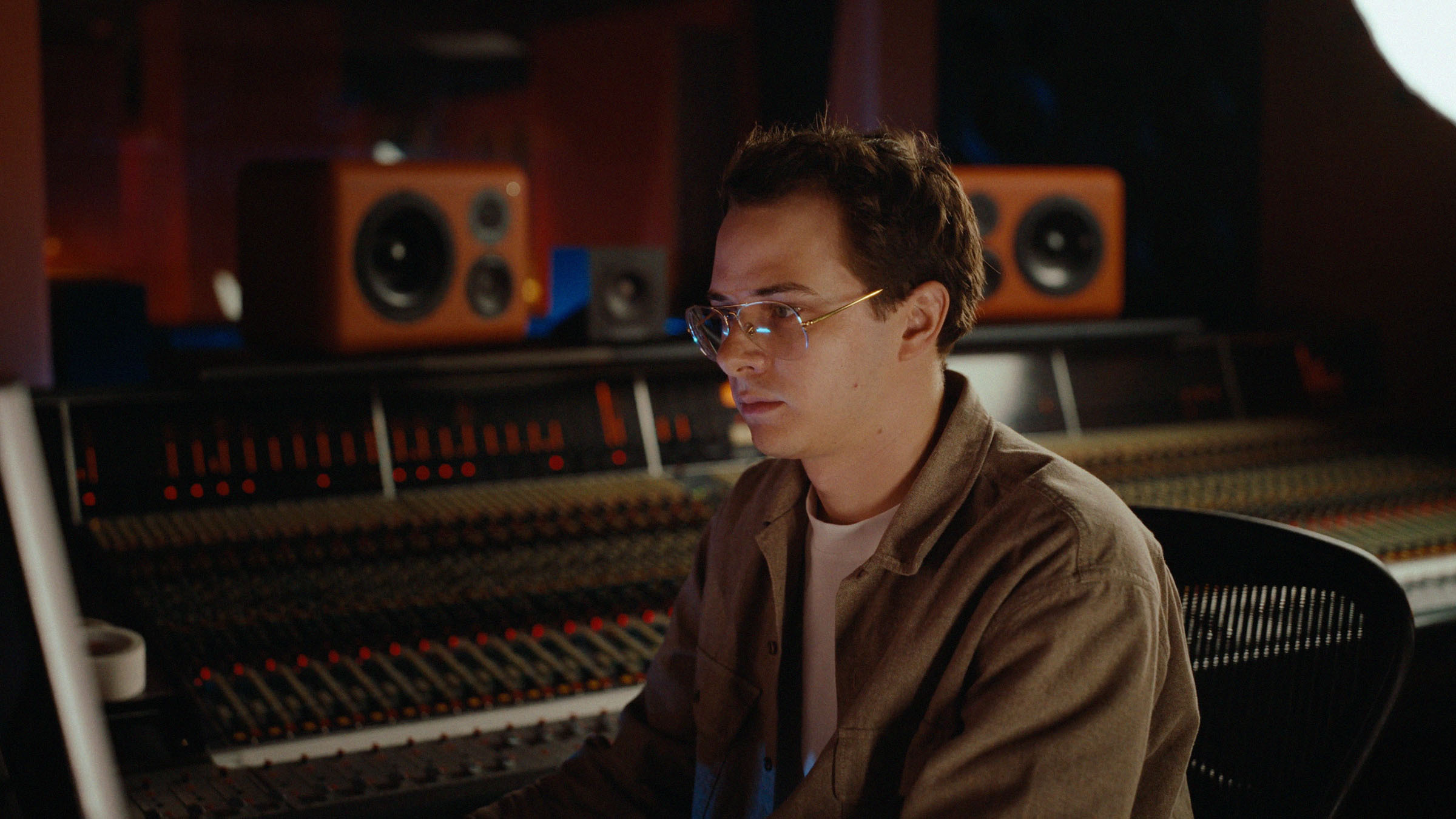
Ricky Damian’s career has taken him from a small studio in Treviso, Italy, to the control rooms of some of the world’s most renowned recording facilities and back out into the world — wherever the work demands. We spoke to producer, mixer, and engineer, Ricky, at Damon Albarn’s Studio 13 in London, where he’s been based for several years. We talked about the path that got him here, his relationship with Focusrite’s ISA preamps, and the portable rig that goes everywhere he does.
From Treviso to London
Ricky came to sound through music. He played in bands throughout his youth before he started as an assistant at a studio in his hometown, Treviso, Italy at 14 years old. The studio had a Soundcraft console — not necessarily a desk that gets talked about in conversations concerning high-end studios, but it left its mark.
“It gave me a sort of old school idea of how things were made,” he recalls. That foundation — analogue, console-rooted, built from listening rather than looking — shaped the way Ricky thought about recording long before he understood it as a professional.
He moved to London to study, made his way into the city’s studios as fast as possible, and at just twenty-one landed a role with producer Mark Ronson.
The timing was good. Ricky was there as Ronson was making Uptown Special, the album that produced the song, ‘Uptown Funk.’ He then went on to engineer nearly everything Ronson recorded between 2014 and 2020, while simultaneously building his own production work with artists including Jorja Smith, Sampha, and Yebba.
Wearing all the hats
Ricky doesn’t describe his career as a linear progression from engineer to producer. Instead, he sees it as a gradual recognition of something he was already doing. Back in Treviso, producing friends’ demos, he was always the one suggesting rewrites or adding layers. Just as a producer with years of experience would, he was hearing the record before it actually existed.
“I was producing records without knowing it,” he says. When he moved into professional engineering, that instinct didn’t disappear, it just went quiet for a while.
“Wearing all the different hats is actually a superpower.”
— Ricky Damian
This perspective runs through everything Ricky does in the studio. His engineer’s ear informs his production decisions; his instinct as a musician shapes how sessions run. And when it comes to his tools, the same thinking applies: equipment earns its place by what it delivers in the moment.
40 years of Forte
The ISA story for Ricky begins with a fascination.
He came across original ISA 110 preamps early in his career at Electric Lady Studios in New York, and Livingstone Studios and The Church in London. Each session confirmed something he had already sensed: that there was a particular character and musicality to the sound that set ISA apart.
“Even the EQ points,” he says. “The way the EQ works, I was always very attracted to that sound and the ergonomics of it.”
But the Focusrite Forte console — the large-format desk designed by Rupert Neve in the late 1980s that the ISA circuit comes from — was something else entirely. Rare, complex, and, in the minds of engineers who knew it, something close to mythological. There are only a handful left in the world. Some years ago, working in the States, Ricky finally got the chance to work on its successor: The Focusrite Studio Console in Studio A at Ocean Way Studios in Los Angeles, California.
“It was absolutely mind blowing,” he says. “I could finally put context to the idea and the dream of trying that console.”
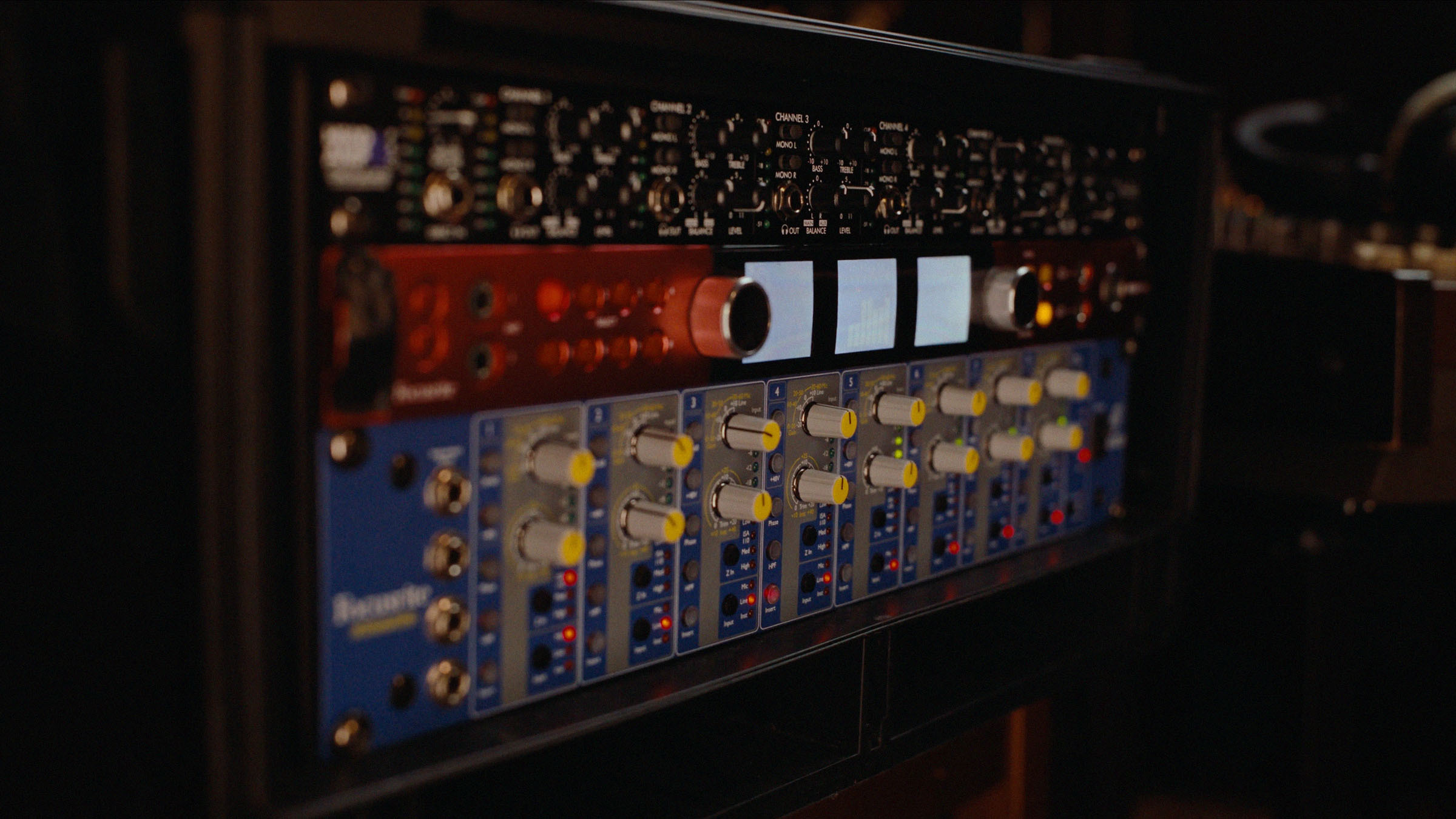
The ISA 110 module was originally built into the Forte Studio Console, and later refined into the standalone ISA preamp range. Its transformer-based circuit, Lundahl LL1538 input transformer and variable input impedance are not new ideas − they’re proven ones.
“There’s something to be said about the legacy of Rupert Neve and what he’s done,” Ricky says. “We’re talking about something that is now over 40 years old — which is crazy to say. But it is so much about the heritage sound of certain pieces of equipment.”
He’s come to trust that implicitly. The right signal through the right equipment makes a difference that isn’t subtle.
A mobile centerpiece
The studio is still where Ricky calls home but sometimes work takes him elsewhere. When it does, a flight case of essential gear always comes with him.
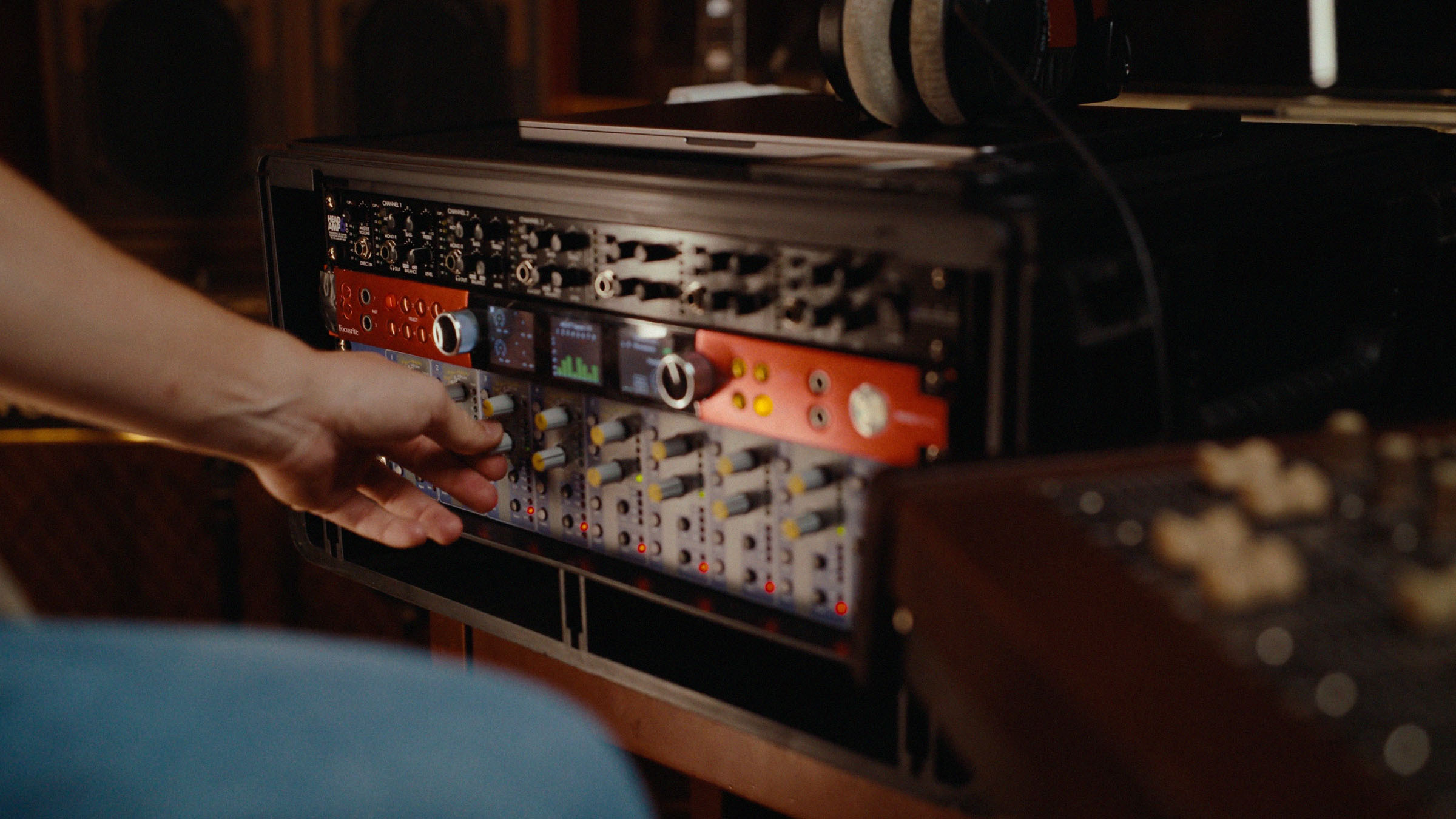
For a decade, a 16-channel portable rig has gone with him wherever the work has been — including barns, private houses, and other spaces that were never designed for recording.
At the centre of the rig is an ISA 828 MkII, which features eight channels of transformer-based preamps, front-panel instrument inputs that remove the need for a separate DI box and variable impedance that lets him shape how microphones interact with the preamp without interrupting the session.
“I’ve relied on it for a decade at this point,” he says. “And it’s never failed on me.”
The appeal is partly sonic and partly practical, and Ricky doesn’t draw a distinction between the two criteria. “This is a Swiss Army knife... and there’s a variety of applications that I always see that fit.” Synth racks, keyboard setups, multi-mic location sessions — the ISA 828 MkII handles all of these unique situations with ease.
The clearest example came when Ricky brought the rig to a live recording at the Young Space in East London for a stripped-down performance by Sampha and Romy. “I got the sound straight away,” he recalls. “Everything was on the same pre. I could play with the impedance of some of the ribbons I had for room mics. Once it was all dialled in, the performance could happen and there was no work to be done on my end.”
For Ricky, that’s the point. Not that the technology disappears, but that it stops being something you have to manage. “Being able to travel with something that is as high quality as possible in terms of preamp sound, but also lets you have all these manipulation tools for the variety of inputs you might have,” he says. “I just couldn’t think of anything better.”


ISA 428 MkII


ISA 828 MkII


ISA One

